Practical Books, Applied Learning, and Business Frameworks
This page collects practical books by Nikolay Gul on AI implementation, cybersecurity decision-making, AI prompting, technical marketing, self-publishing, and business technology adoption. The books are best understood as a professional learning and applied research portfolio: a way to turn complex technology topics into clearer frameworks, checklists, decision models, audiobook lessons, and plain-language guidance.
AI tools are part of the development workflow, but they do not replace human judgment. I use AI for research expansion, drafting support, critique, structure testing, editing, cross-model comparison, audiobook adaptation, and production assistance. The topic selection, positioning, frameworks, revisions, publishing decisions, and final responsibility are mine.
For employers and recruitersEvidence of applied AI learning, technical communication, GTM thinking, cybersecurity buyer education, publishing operations, and self-directed professional development.
For business buyersPlain-language frameworks for AI adoption, cybersecurity purchasing, risk evaluation, marketing clarity, and operational decision-making.
For readers and learnersPractical guides that explain complex AI, cybersecurity, prompting, publishing, and marketing topics without unnecessary jargon.
Why I Write These Books
I use book development as a structured way to learn, test, organize, and communicate complex ideas. Each book begins with a practical problem: how leaders adopt AI, how businesses evaluate cybersecurity vendors, how people use prompts, how authors publish independently, or how organizations make better technology decisions.
The process includes research, note organization, AI-assisted exploration, cross-model comparison, prompt testing, human editing, fact-checking, framework design, cover and metadata work, audiobook adaptation, publishing setup, and continued revision. This is not a one-prompt writing process. It is a full production workflow.
The common goal across the books is practical clarity: helping readers understand AI, cybersecurity, marketing, publishing, and technology adoption without inflated claims or unnecessary complexity.
Cybersecurity Decision System
In production for paperback, eBook, and audiobook release.
In production for paperback, eBook, and audiobook release.
New / In Production
Cybersecurity Decision System
How Leaders Manage Cyber Risk, Trade-Offs, and Resilience
A practical decision guide for executives, owners, board members, IT leaders, operations leaders, MSP/MSSP clients, healthcare offices, law firms, manufacturers, public-sector teams, and professional-service organizations that need clearer cybersecurity decisions under real business constraints.
The book does not try to turn executives into cybersecurity engineers. It gives leaders a decision system for reading signals, managing trade-offs, organizing evidence, asking better questions, and keeping cybersecurity aligned with business reality as technology, vendors, AI tools, insurance requirements, and threats change.
cybersecurity decision discipline
signal versus noise
cyber risk economics
human behavior
AI governance
shadow AI
deepfakes
vendor trust
boardroom questions
Decision Ledger
Trust Evidence Pack
90-day readiness sprint
Development note: Developed as a capstone cybersecurity and AI decision-making project, combining practical research, executive communication, cyber-insurance readiness thinking, AI governance, business-risk framing, and audiobook production.
LCCN: 2026922427
Paperback ISBN: 979-8-9938806-3-1
eBook ISBN: 979-8-9938806-4-8
Audiobook ISBN: 979-8-9938806-6-2
View Production Notes
Published
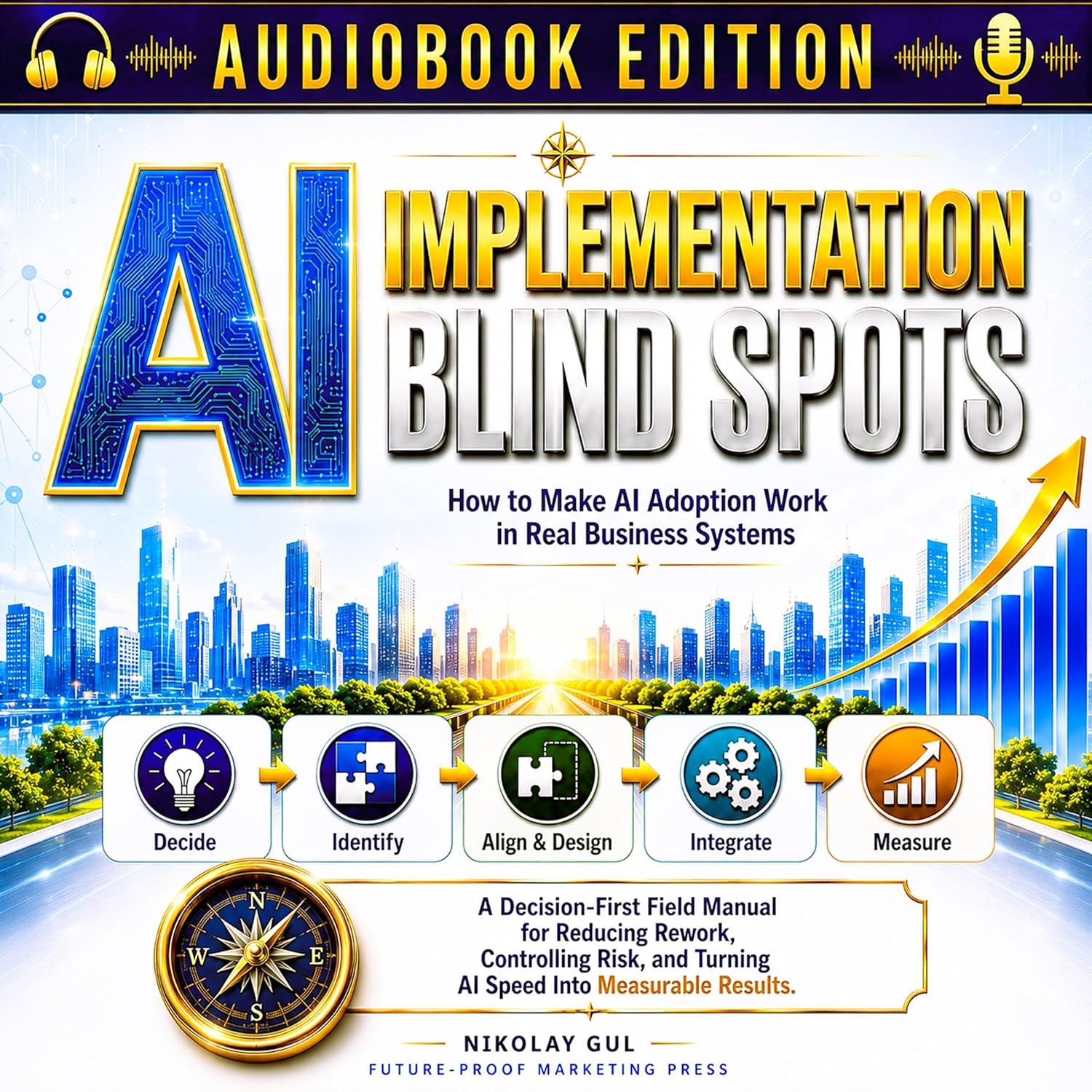
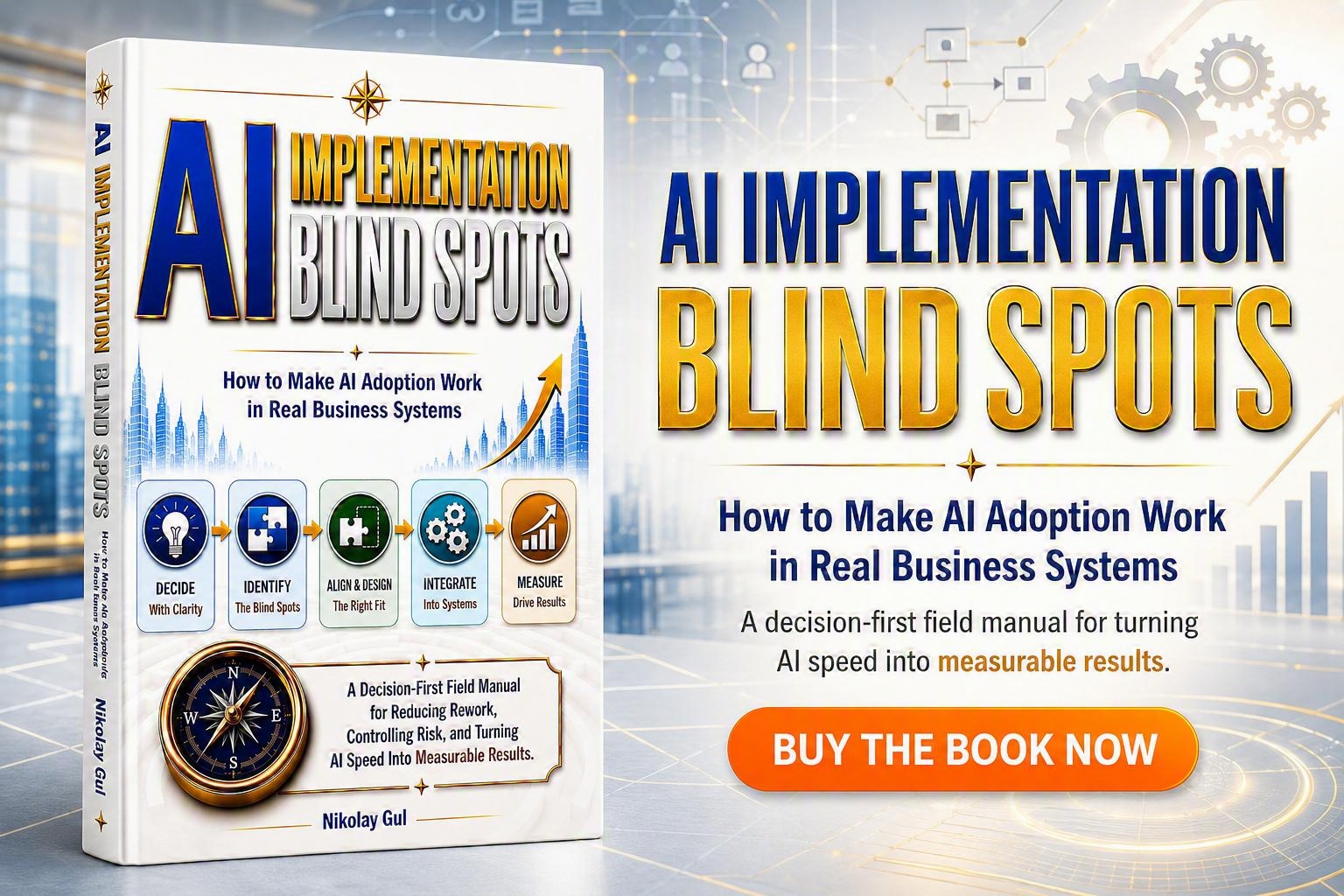
AI Implementation Blind Spots
How to Make AI Adoption Work in Real Business Systems
A practical guide for leaders, consultants, technical product marketers, operations teams, and businesses trying to make AI adoption work inside real workflows instead of treating AI as a disconnected chatbot experiment.
It focuses on the operational problems companies often miss when they rush into AI: unclear ownership, weak workflows, poor data readiness, unrealistic expectations, governance gaps, employee resistance, measurement problems, and disconnected tools.
AI implementation
AI adoption
workflow readiness
governance
risk management
change management
business systems
Development note: Grew from applied AI learning, job-market research, implementation strategy study, workflow analysis, and repeated testing of AI use cases across business functions.
LCCN: 2026912042
Paperback ISBN: 979-8-9938806-7-9
eBook ISBN: 979-8-9938806-5-5
Audiobook ISBN: 979-8-9938806-2-4
Explore Interactive Framework

Published
Before Buying Cybersecurity
How to Evaluate, Negotiate, and Partner with IT Security Providers
A plain-language guide for business owners and leaders who need to evaluate IT security providers, cybersecurity services, assessments, proposals, and vendor claims before making a buying decision.
It helps readers ask better questions before signing a contract: what risk is being reduced, what evidence will prove the service is working, what is included, what is not included, who owns which responsibility, and how cybersecurity should support continuity, insurance readiness, and operational trust.
cybersecurity buying
vendor evaluation
MSP and MSSP selection
cyber insurance readiness
business risk
security assessments
Development note: Developed from cybersecurity vendor evaluation, buyer education, cyber-insurance readiness research, and practical conversations about how non-technical leaders choose security providers.
LCCN: 2025923715
Paperback ISBN: 979-8-9927440-9-5
eBook ISBN: 979-8-9938806-0-0
Audiobook ISBN: 979-8-9938806-1-7
Explore Interactive Assessment
Published
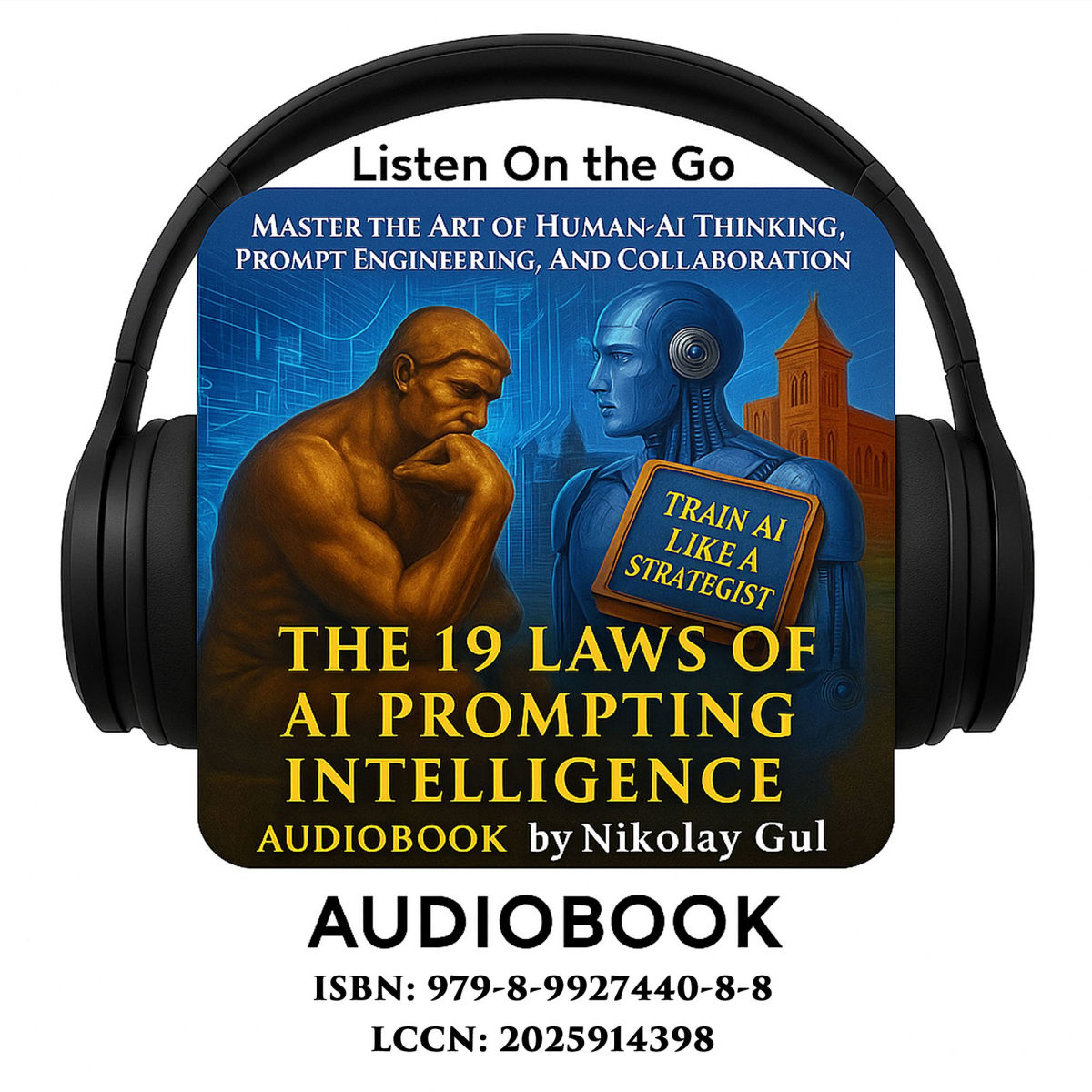
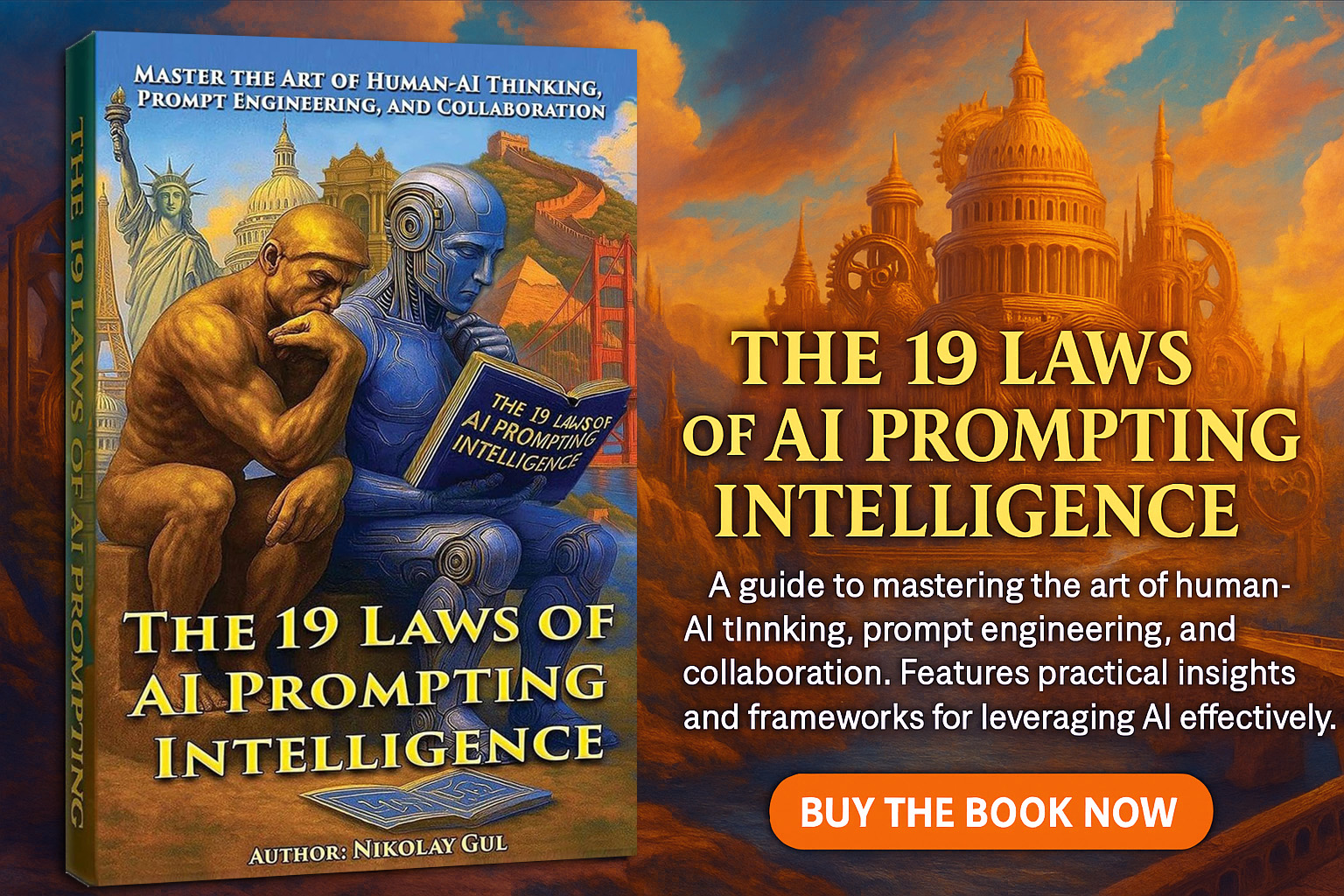
The 19 Laws of AI Prompting Intelligence
Master the Art of Human-AI Thinking, Prompt Engineering, and Collaboration
A structured guide to using AI prompts more clearly, critically, and effectively. It explains prompting as a thinking system: how to define the task, set constraints, test assumptions, compare outputs, reduce hallucinations, improve instructions, and use AI as a reasoning partner.
Useful for professionals, students, marketers, consultants, educators, entrepreneurs, and AI users who want better results from ChatGPT, Gemini, Claude, Grok, and other AI systems without treating prompting as hype or magic.
AI prompting
prompt engineering
custom instructions
AI reasoning
cross-model testing
AI literacy
Development note: Grew from years of prompt testing, custom instruction design, AI comparison, self-education, and practical experimentation with multiple AI models.
LCCN: 2025914398
Paperback ISBN: 979-8-9927440-4-0
eBook ISBN: 979-8-9927440-3-3
Audiobook ISBN: 979-8-9927440-8-8
View Retailer Page
Published
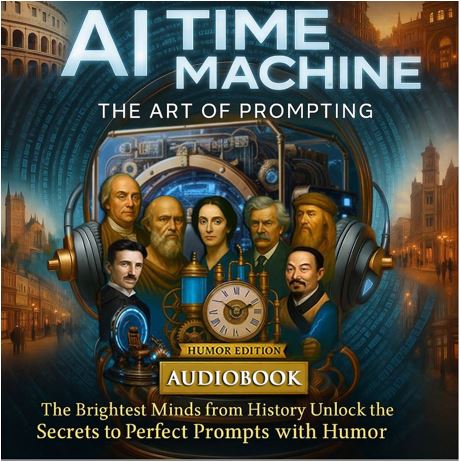
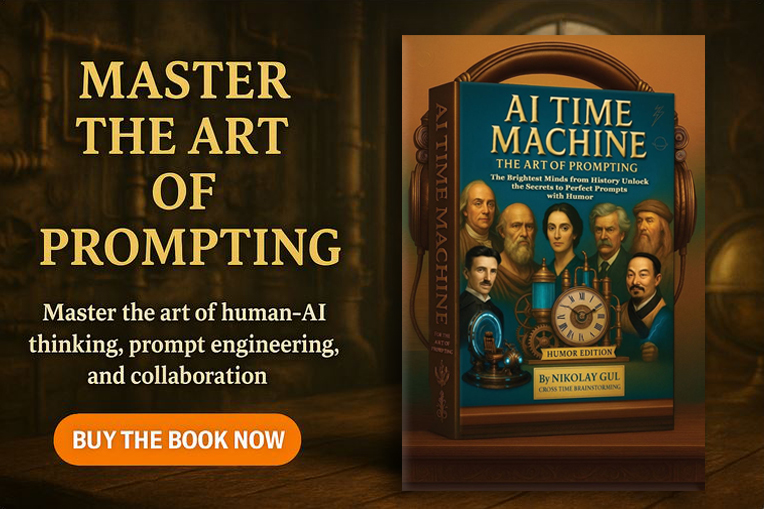
AI Time Machine - The Art of Prompting
The Brightest Minds from History Unlock the Secrets to Perfect Prompts with Humor
A more creative and accessible companion to the AI prompting books. It explores prompting through imagination, examples, humor, storytelling, and practical experimentation.
Designed for readers who want to understand AI prompting without treating it like a dry technical manual. It shows how prompts can be used to explore ideas, improve thinking, generate scenarios, test perspectives, and learn through curiosity.
creative prompting
AI education
scenario thinking
humor edition
learning with AI
Development note: Came from continued AI prompting practice, creative testing, educational experiments, and the idea that learning AI can be serious without becoming boring.
LCCN: 2025918179
Paperback ISBN: 979-8-9927440-6-4
eBook ISBN: 979-8-9927440-5-7
Audiobook ISBN: 979-8-9927440-7-1
View Retailer Page
Published
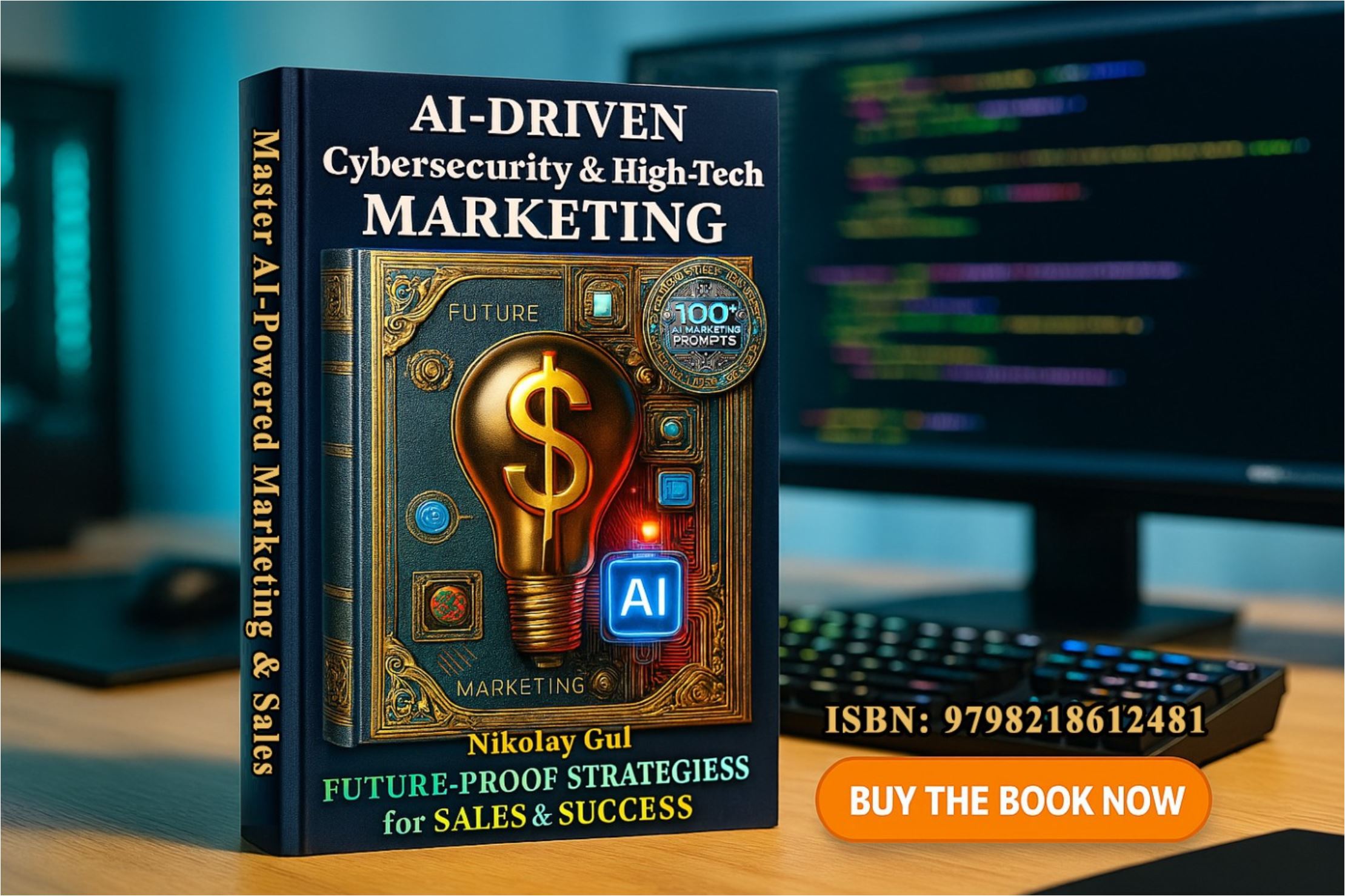
AI-Driven Cybersecurity & High-Tech Marketing
Future-Proof Strategies for Sales and Success
A practical bridge between cybersecurity, high-tech marketing, buyer education, SEO, sales messaging, and AI-assisted content strategy for MSPs, MSSPs, SaaS companies, cybersecurity providers, consultants, and technical businesses.
The book focuses on how complex technology companies explain value, build trust, educate buyers, and turn technical expertise into practical marketing assets. It reflects experience in web development, ecommerce, SEO, content, technical marketing, and cybersecurity-related business communication.
cybersecurity marketing
high-tech marketing
buyer education
SEO
sales enablement
AI-assisted content
Development note: The first major book project, built from years of marketing notes, web work, ecommerce operations, cybersecurity messaging, SEO thinking, and AI-assisted organization.
LCCN: 2025902819
Paperback ISBN: 979-8-218-61248-1
eBook ISBN: 979-8-9927440-0-2
View Retailer Page
Published
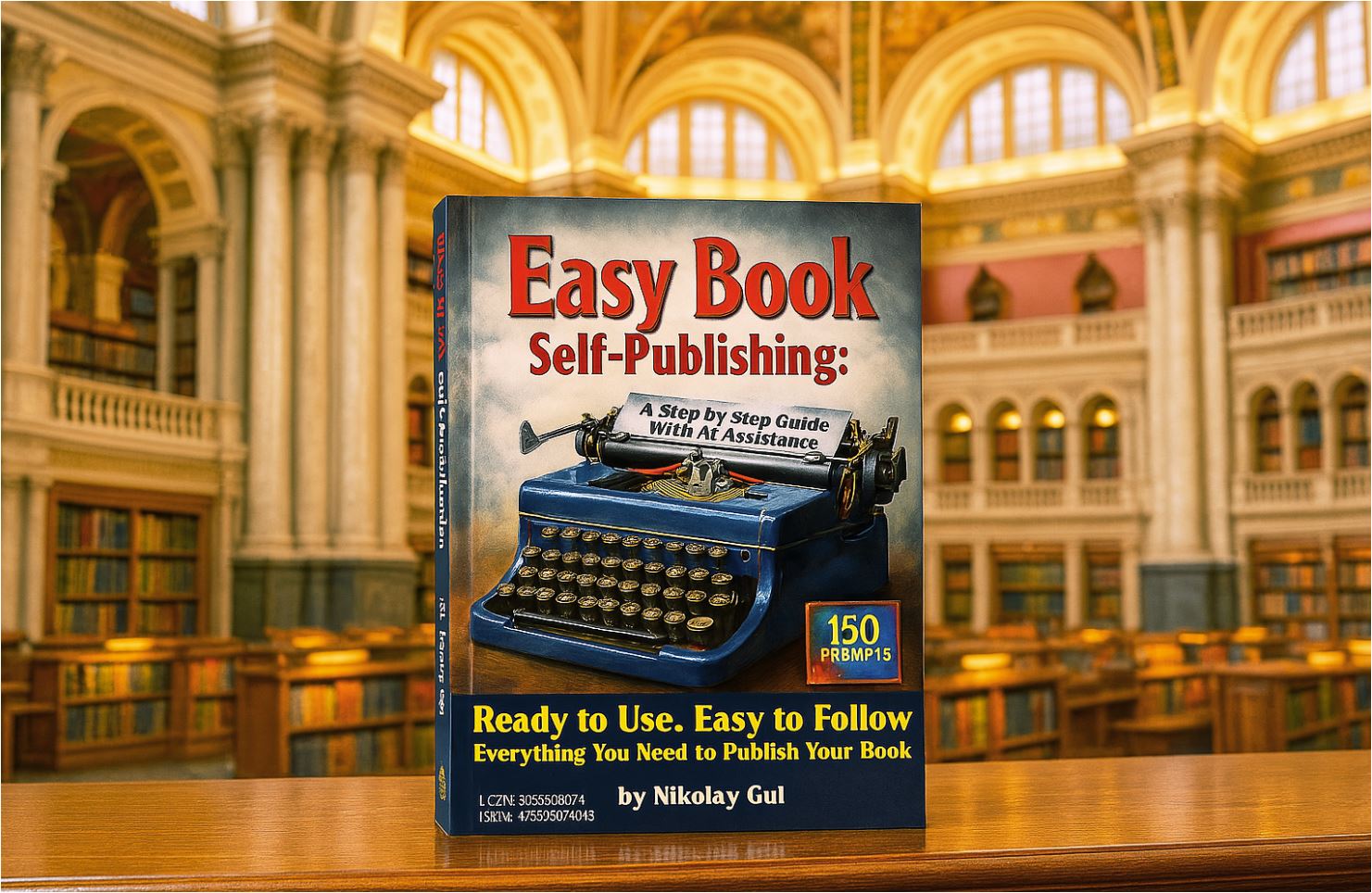
Easy Book Self-Publishing
A Step-by-Step Guide with AI Assistance
A practical guide for authors who want to understand the full self-publishing process: manuscript preparation, formatting, ISBNs, metadata, covers, publishing platforms, distribution, audiobook planning, and post-publication updates.
Written for independent authors, consultants, professionals, educators, and business owners who want to turn knowledge into a published book without relying only on theory.
self-publishing
ISBNs
metadata
book formatting
audiobook planning
AI-assisted publishing
Development note: Began as a working record of the real publishing process: what was learned, what went wrong, what needed to be repeated, and what could help the next author avoid confusion.
LCCN: 2025906574
Paperback ISBN: 979-8-9927440-1-9
eBook ISBN: 979-8-9927440-2-6
View Retailer Page
How AI Fits Into My Book Development Process
I use AI as a research, editing, critique, drafting, comparison, and production tool. That includes testing ideas across AI systems, improving chapter structure, checking clarity, generating alternative explanations, adapting text for audiobook narration, and stress-testing whether a framework is practical for real readers.
AI helps accelerate the process, but it does not remove the work. A serious book still requires topic selection, positioning, research judgment, organization, editing, source review, formatting, metadata, cover decisions, publishing setup, audiobook production, and responsibility for the final result.
My use of AI is part of the subject of the work itself: learning how AI changes thinking, writing, marketing, cybersecurity, publishing, and business decision-making. The books are not only products. They are records of applied learning and practical experimentation.
Frequently Asked Questions
Are these books AI-generated?
They are AI-assisted, not AI-owned. I use AI tools for research support, drafting help, critique, editing, comparison, structure testing, audiobook adaptation, and production support. The judgment, topic selection, frameworks, revisions, publishing choices, and final responsibility are mine.
Why publish books while learning a topic?
Writing a book forces structured learning. It requires research, organization, examples, testing, revision, editing, formatting, metadata, publishing, and reader-focused explanation. For me, books are a way to convert learning into practical frameworks.
What topics do these books cover?
The books cover AI implementation, cybersecurity decision-making, AI prompting, technical marketing, self-publishing, business technology adoption, buyer education, and practical decision frameworks.
Are these books academic textbooks?
No. They are practical business guides. They are written for business owners, professionals, marketers, consultants, technology providers, authors, and readers who want plain-language explanations and usable frameworks.
How do these books relate to professional work?
The books are part of a professional portfolio showing applied research, technical communication, AI-assisted workflow design, publishing operations, cybersecurity buyer education, AI implementation thinking, and practical business framework development.
The books listed here are part of a professional learning, research, publishing, and buyer-education portfolio. Availability, formats, pricing, and retailer listings may vary over time.
ISBN and LCCN information is based on author/publisher records, Bowker Identifier Services records, Library of Congress records where available, and public retailer/library listings. Availability by format may vary by retailer, country, and library platform.