
Cybersecurity Decision System
How Leaders Manage Cyber Risk, Trade-Offs, and Resilience
A practical decision framework for executives, owners, and board members who need clearer cybersecurity decisions, stronger evidence, and better operational resilience under real business constraints.
Security Is Not a Product. It Is a Decision Discipline.
Many organizations do not lack tools, awareness, or access to expertise. What they lack is a practical way to turn cybersecurity information into better business decisions.
A business does not become resilient because it reads a report, buys a tool, or holds one security meeting. It becomes resilient when leaders convert clarity into a manageable sequence of action.
This book does not try to turn executives into cybersecurity engineers. It gives leaders a practical decision system: a way to read signals, manage trade-offs, organize evidence, ask better questions, and keep cybersecurity aligned with the business as conditions change.
The core idea is simple: cybersecurity is not something a business installs once. It is something a business sustains through consistent, informed decisions over time. Tools matter. Providers matter. AI governance matters. But none of them can replace decision discipline.
Executive Media Briefings
Review premium multimedia overviews directly mapping the operational promise of the Cybersecurity Decision System.
System Overview Briefing
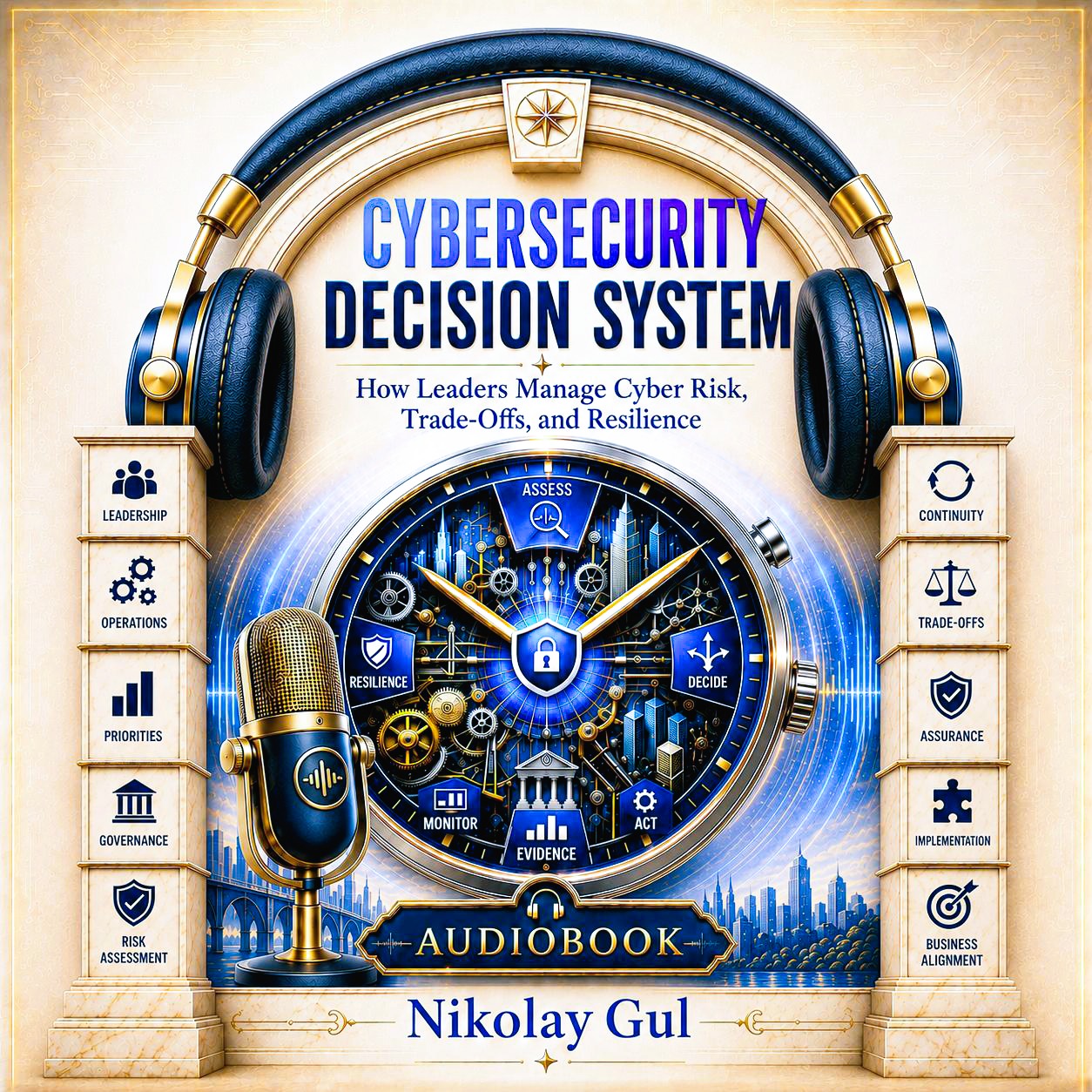
Audiobook Briefing
Chapter 3 Excerpt
AI Makes Cybersecurity a Business Decision
The Cyber Risk & Cost-of-Delay Calculator
Based on Chapter 6: "The New Economics of Cyber Risk". Test how the cost of an unmitigated risk compounds over time compared to the upfront cost of stability.
1-Hour Impact
1-Day Impact
1-Week Impact
The Core Frameworks
The tools introduced in this book are intentionally simple, designed to organize the right conversation before the conversation becomes urgent.
1. The Decision Ledger
A simple record of important decisions, accepted risks, exceptions, ownership, and review triggers. Prevents assumptions from becoming permanent risk.
2. The Trust Evidence Pack
An organized evidence base that helps the business answer serious questions from insurers, auditors, or clients with discipline before pressure arrives.
3. The 90-Day Readiness Sprint
A structured path to replace vague confidence with visible readiness without trying to fix everything at once. See clearly, reduce avoidable risk, then prove what matters.
4. The Continuity Trade-Off Card
A one-page record for critical processes where a security action could interrupt operations. Defines degraded modes and recovery evidence requirements.
5. The Sensitive Action Rule
A non-negotiable verification rule designed to protect the business at the exact point where trust becomes action against AI-driven deepfakes and impersonation.
6. Boardroom Decision Brief
A structured format to replace technical fog and executive theater with a clear view of material changes, decisions needed, and risks accepted or deferred.